IBQ-MEC-503 in action: lightweight reinforcement for technical mountain trousers
Targeted protection to tackle abrasion, tearing and wear without adding unnecessary weight
In the mountains, not all areas of a garment are subjected to the same level of stress.
The lower legs, knees, seat area, and certain contact points are exposed to much greater friction from boots, rocks, vegetation, and equipment. They also endure repeated bending, accidental snags, and localized stress that can accelerate fabric wear.
The challenge is to increase the strength of these areas without making the entire garment heavier, stiffer, or bulkier.
To address this need, IBQ-MEC-503 is incorporated as a localized reinforcement fabric in technical trousers intended for the mountain and adventure sector.
The challenge: protecting the most exposed areas
Technical trousers must offer freedom of movement, comfort, and low weight. However, they also need to withstand continuous contact with potentially abrasive surfaces and elements.
The main situations of wear and tear include:
- The chafing of the lower leg against boots and equipment.
- Contact with rock and rough surfaces.
- Hooks with protruding elements or vegetation.
- Repeated friction during ascents, descents, and technical movements.
- Small cuts or punctures that can develop into larger tears.
Using a heavy fabric throughout the garment would increase its durability, but it could also compromise mobility, comfort, and adaptability to movement.
The solution lies in design the garment by zones, using a lightweight and flexible main fabric, along with reinforcement panels at the points where greater mechanical protection is really needed.
The application: strategic reinforcement in mountain pants
In this application, IBQ-MEC-503 is used in localized panels of the garment, especially on the lower legs and other areas subjected to a high level of abrasion, strain, or contact with equipment.
The placement of the reinforcement can be adapted to the design and intended use of each pair of trousers:
- Inside of the ankles and lower legs.
- Contact area with boots.
- Knees and flexion areas.
- Seating area.
- Pockets and openings.
- Points exposed to tools or accessories.
- Areas subject to repeated friction with equipment.
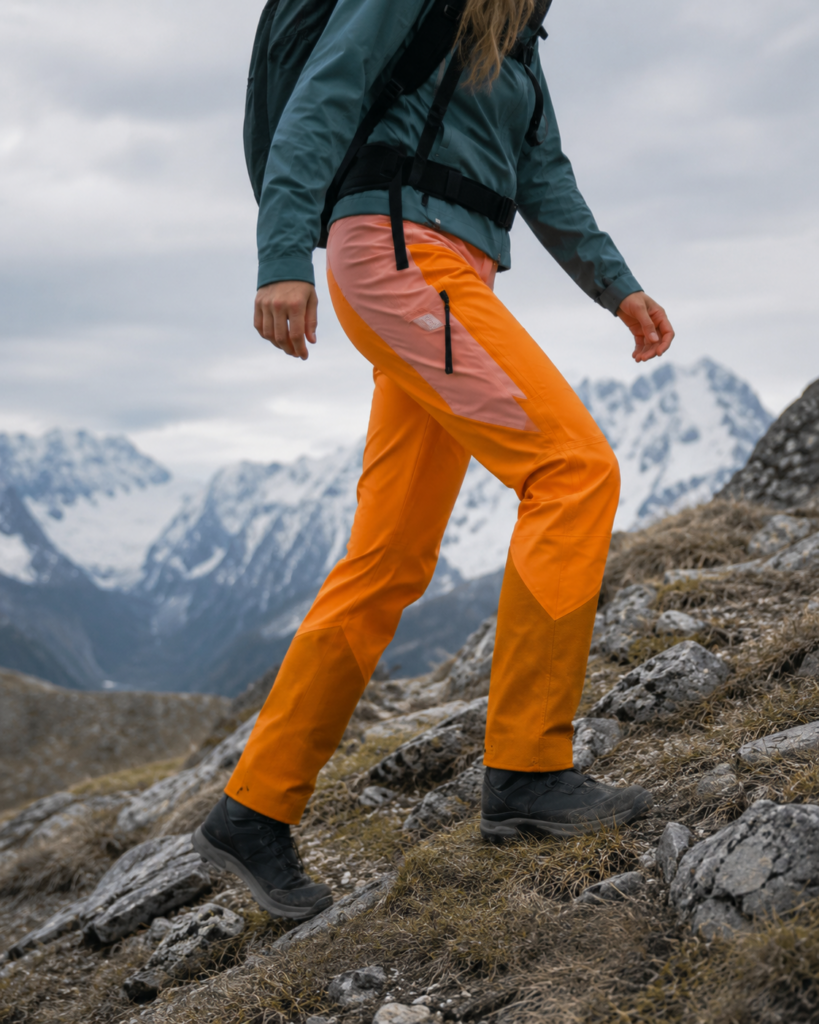
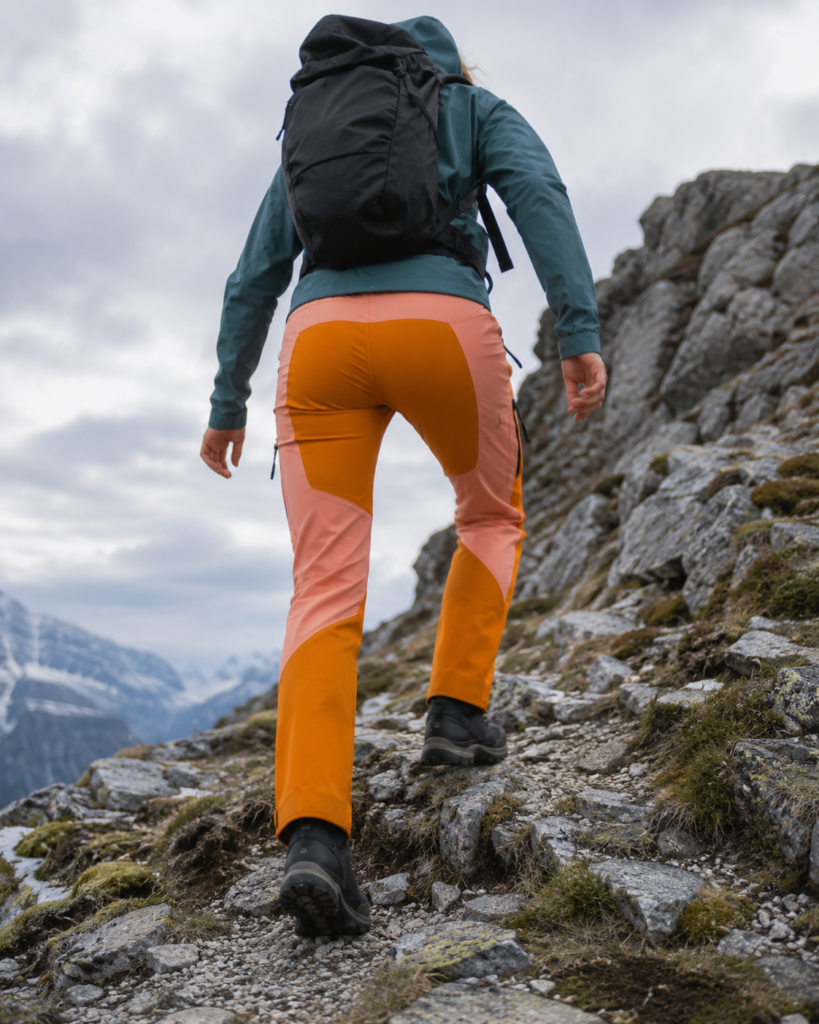
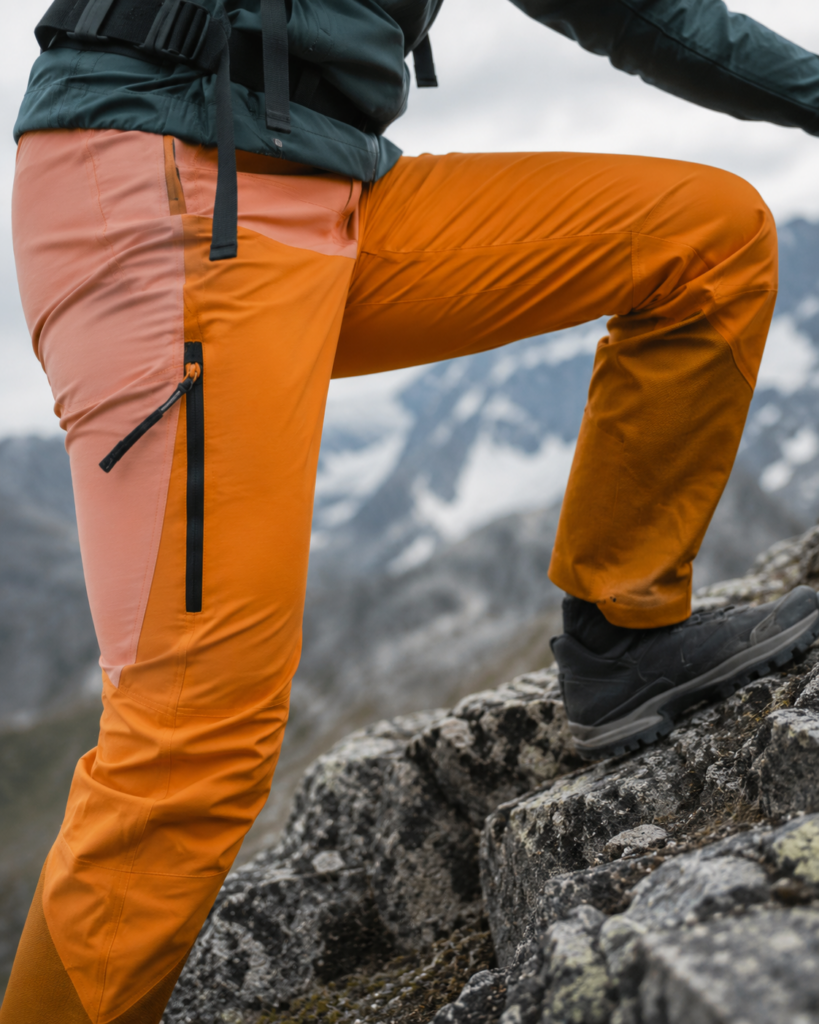
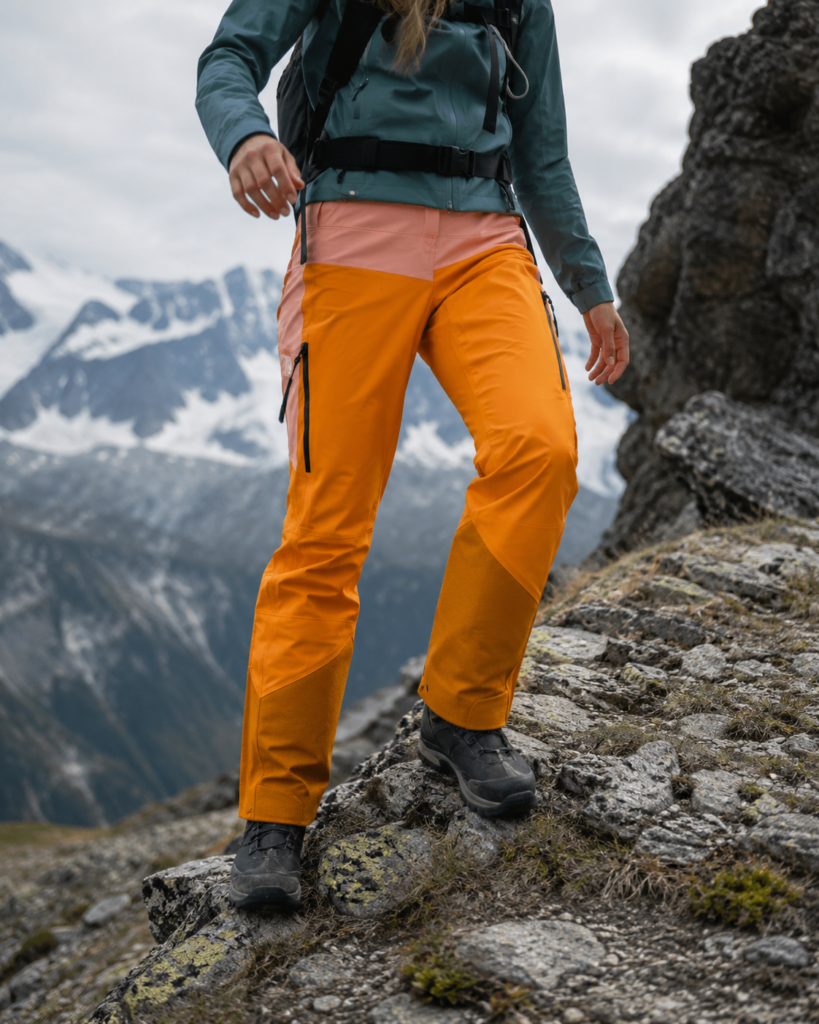
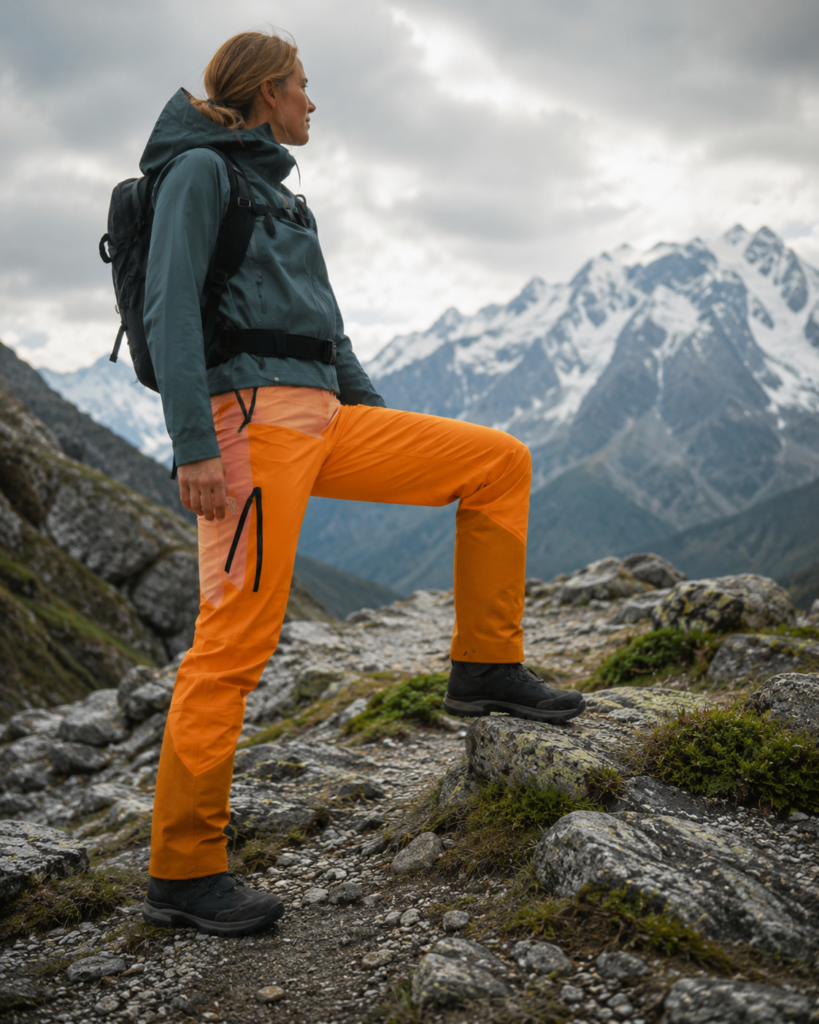
In this way, protection is concentrated on critical points while the rest of the garment maintains a lighter construction and is geared towards mobility.
More strength where the garment is exposed. Less weight where it's not needed.
A solution developed to reinforce without overloading
IBQ-MEC-503 is a fabric true rip-stop 185 g/m², composed of 62 % of high tenacity polyamide and 38 % of ultra high molecular weight polyethylene fiber from bio-circular sources.
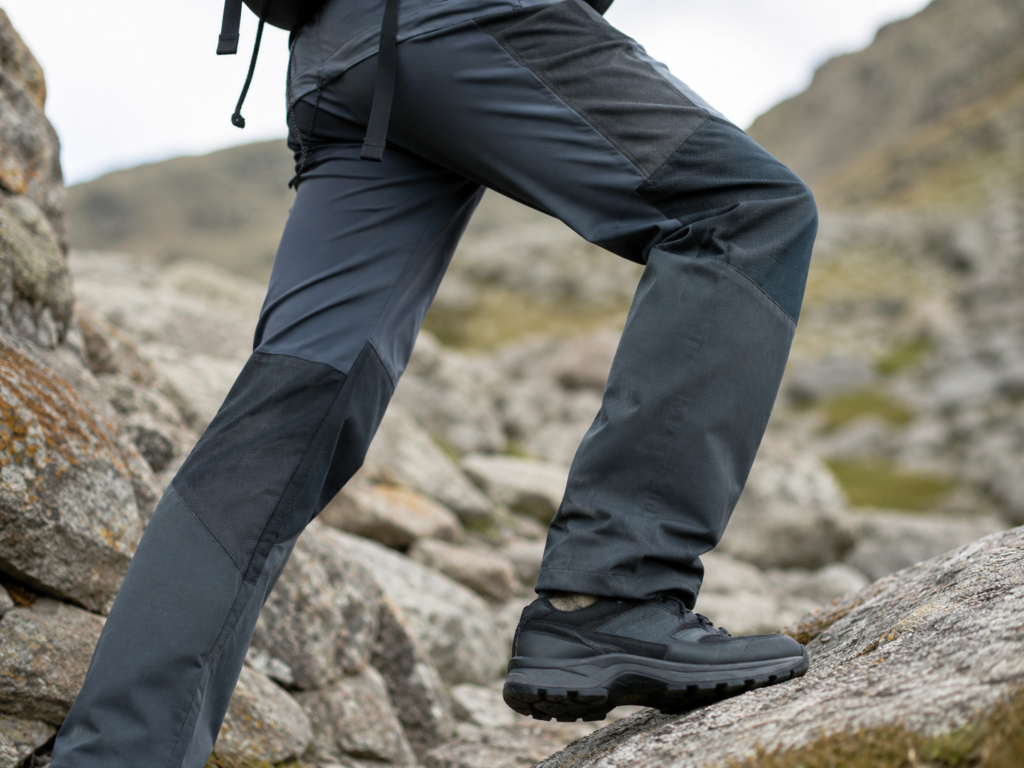
This combination allows you to bring together in a single structure:
- High abrasion resistance.
- An excellent strength-to-weight ratio.
- High tensile strength.
- A high capacity to limit the spread of tears.
- Low weight.
- Flexibility.
- Quick drying.
The material is developed for reinforcement panels in garments, footwear, backpacks, bags and technical equipment subjected to demanding mechanical conditions.
Mechanical performance for demanding conditions
In its version IBQ-MEC-503-WR, The laboratory tests recorded the following results:
Tensile strength
- 2,400 N in warp.
- 1,500 N in weft.
- Test performed according to UNE-EN-ISO 13934-1.
This property indicates the ability of the tissue to resist forces that attempt to stretch it until it breaks.
Tear resistance
- 700 N in warp.
- 500 N in weft.
- Test performed according to UNE-EN-ISO 13937-2.
Tear resistance is especially relevant when the fabric has already suffered a small cut, snag or puncture and must prevent the damage from spreading further.
Abrasion resistance
- Minimum of 150,000 cycles.
- Test performed according to UNE-EN-ISO 12947-2.
This feature allows you to deal with repeated rubbing that occurs in areas such as the bottoms of trousers, knees or contact points with boots and equipment.
Surface water repellency
- ISO Classification 4 in the WR version.
- Test performed according to UNE-EN-ISO 4920.
Surface repellency helps reduce initial moisture absorption and makes the garment easier to use in variable outdoor environments.
Why tear resistance is so important
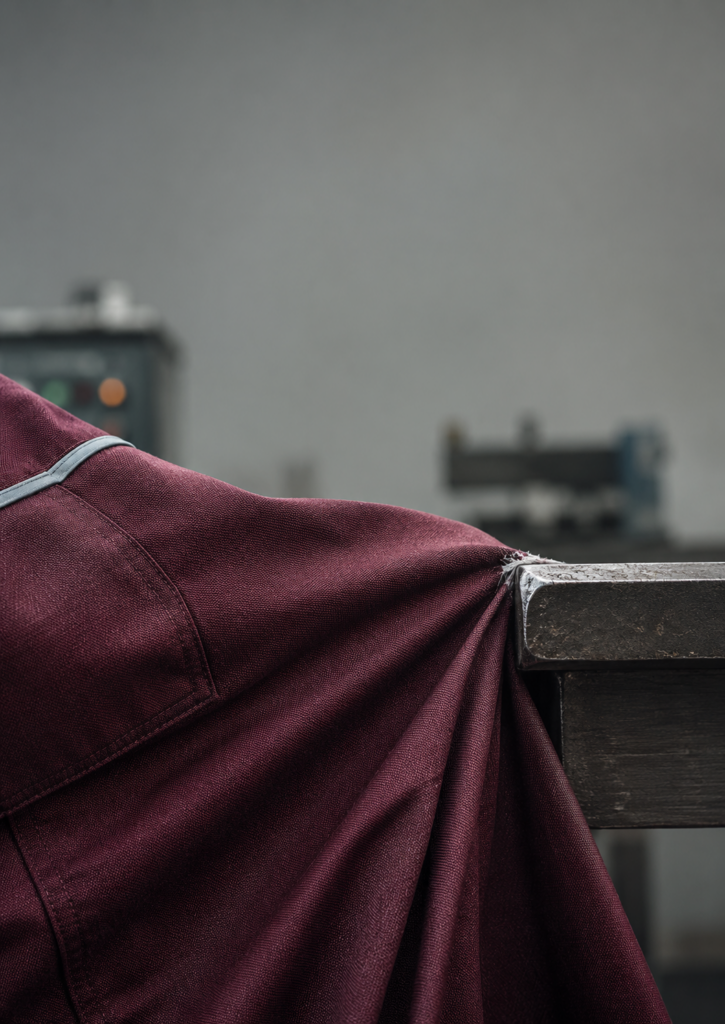
In a mountain activity, minor damage can occur from contact with rock, an edge, a branch, a buckle, or any piece of equipment.
The problem isn't just the initial tear. When the garment is subjected to further stress, that small defect can quickly widen and affect a larger area of the pants.
High tear resistance helps limit this propagation, maintaining the fabric's structure after a minor incident. This can help the garment remain functional and reduce the need for premature repairs.
Standardized tests allow for objective measurement of this capacity, although the final durability also depends on the pattern making, the seams, the panel configuration, the finishes, the maintenance and the actual conditions of use.
Design by zones to improve the whole
The value of IBQ-MEC-503 lies not only in its mechanical specifications. Its main contribution is enabling a more efficient garment construction.
By using the material only in the areas of greatest exposure, the manufacturer can combine:
- Mechanical protection in critical areas.
- Lightness in the garment as a whole.
- Flexibility in the areas designated for movement.
- Lower volume than a fully reinforced construction.
- Greater resistance to repeated use.
- A more efficient distribution of materials.
This strategy is especially suitable for mountaineering, trekking, climbing, skiing, alpine activities and other outdoor applications where every gram counts, but resistance cannot be secondary.
The result: protection where it truly adds value.
The integration of IBQ-MEC-503 allows the development of technical trousers with a material architecture adapted to the requirements of each area.
The reinforced panels withstand friction, snags, and mechanical stress, while the main fabric retains the properties necessary to promote movement and comfort.
The result is a garment prepared for demanding use, in which resistance is not achieved by adding material indiscriminately, but by using the right solution in the right place.
Lightweight by design. Engineered to last.
A solution adaptable to multiple products
The same localized reinforcement strategy can be applied in:
- Technical trousers and jackets.
- Hiking boots.
- Backpacks and bags.
- Leggings and accessories.
- Pockets and tool holders.
- Emergency equipment.
- Tactical products.
- Professional garments subjected to abrasion.
- Contact panels with equipment and rough surfaces.
For projects that also require weather protection, the product family includes a three-layer laminated version with a waterproof and breathable membrane and a weight of 265 g/m². This alternative allows for combining mechanical strength and weather protection within a single textile platform.
In the mountain and adventure sector, increasing durability should not necessarily mean increasing the weight of the entire garment.
IBQ-MEC-503 allows you to reinforce the most vulnerable areas of a technical pant, offering a balanced combination of abrasion resistance, tear resistance, traction capacity, flexibility and lightness.
A solution developed to protect the points that need it most and maintain the freedom of movement required by the activity.
Are you developing a garment or technical equipment for demanding conditions?
Discover how IBQ-MEC-503 It can be integrated into your next project for pants, footwear, backpacks, or high-performance equipment.
You do. We protect.